Horse Racing Matched Betting: 2026 Guide to BOG & Refunds
Horse racing matched betting profits from BOG, refund offers, and place insurance. A step-by-step 2026 guide to extracting value from racing promotions.
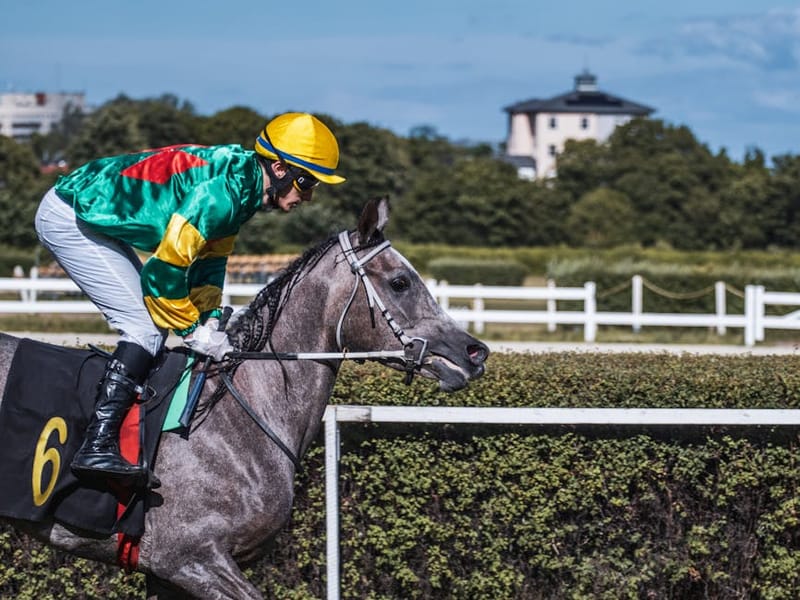
Horse racing has the richest, most consistent set of bookmaker promotions of any UK sport - and that makes it one of the most profitable areas of matched betting. Best Odds Guaranteed, refund offers when your horse runs second, extra-place insurance, faller money-back, festival-day accumulator boosts: every major UK bookmaker runs a stack of racing-specific promotions, and most of them have positive expected value if you know how to extract it.
This guide covers the racing-specific techniques that don't exist for football or other sports - particularly Best Odds Guaranteed (BOG) and refund offers - and how to apply matched-betting principles to them. If you're brand new, start with our beginner's guide first; this post assumes you already understand back/lay basics and have an exchange account funded.
Why is BOG the core racing edge?
Why this single offer makes racing matched betting profitable
Best Odds Guaranteed is a promise from a bookmaker that if you take the early-morning price on a horse and the Starting Price (SP) is bigger when the race goes off, they'll pay you out at the SP. It's effectively a free upgrade - your downside is capped at the price you took, and your upside is unlimited drift in the market.
Most major UK bookies run BOG by default on UK and Irish horse racing - bet365, William Hill, Paddy Power, Coral, Sky Bet, and many others all offer it. The ways to find each bookmaker's BOG terms are listed on our individual sign-up offer walkthroughs.
From a matched-betting perspective, BOG creates an asymmetric situation. You back the horse with a bookie that offers BOG and lay it on the exchange. If the SP comes in shorter than the price you took, your back/lay calculation is roughly neutral - small loss either way (the qualifying loss). If the SP drifts longer, the bookie pays you out at the bigger SP price while your exchange lay is at the smaller price you took, generating a profit.
The key concepts:
- Take the morning price early. BOG only applies to bets placed at non-SP prices. The earlier you take the price, the more chance the SP drifts.
- Lay at the price you took. Your hedge is locked in at the moment you place both bets.
- Profit when the SP drifts longer. You collect the difference between your taken price and the (longer) SP, free.
- Roughly break even when the SP comes in shorter. You take the small qualifying loss.
Average over enough bets and the drift wins (most horses drift slightly between morning prices and SP because punters back the well-fancied favourites and lengthen the field). Profit per bet is small - typically 1–3% of stake - but it's volume that makes BOG worthwhile.
How do refund offers actually work?
The second pillar of racing matched betting
Refund offers are the other major racing promotion type. The bookmaker offers your stake back (as a free bet, sometimes as cash) if a specific scenario plays out. Common variants:
Money back if your horse finishes second. Common at major festivals. You back a horse, lay it on the exchange, and if it places second, the bookie refunds your stake - usually as a free bet, sometimes cash.
Money back if your horse falls / is brought down / unseats. Particularly relevant for jumps races (National Hunt). Faller money-back offers are routine at the Cheltenham Festival and Aintree.
Money back if a specific tipster's selection loses. Some bookies offer refunds when their named tipster's horse doesn't win.
Each-way money-back specials. Money back as a free bet if your each-way horse finishes outside the top 4 (or wherever the cut-off is).
The matched-betting approach is the same in each case: back at the bookie, lay on the exchange, and the offer adds an extra positive-EV branch. If the trigger condition fires, you pocket the refund (minus exchange fees and any qualifying loss). If it doesn't fire, you take the standard back/lay qualifying loss.
Calculate the EV using the standard formula:
- Probability of trigger × value of refund minus (1 – probability of trigger) × qualifying loss
For most refund offers, the EV is positive - typically 30-50% of stake when triggered, with a small qualifying loss when not. Stake matters: most refund offers cap maximum stake at £25 or £50, which is fine for matched betting but limits how much you can scale.
What are extra-place offers and how do you arb them?
Possibly the most consistent profit centre in racing
Extra-place offers are among the most reliably profitable racing promotions, but they require some explanation. A bookmaker advertises that they'll pay each-way places on, say, the top 5 finishers in a particular race, when the standard market on the exchange only pays each-way to the top 3 (or 4).
The technique works by:
- Backing the horse each-way at the bookmaker (so you have a win bet and a place bet)
- Laying the win component on the exchange (standard back-and-lay)
- Laying the place component on the exchange's place-only market
If the horse wins or doesn't finish top 5, the back/lay maths roughly cancel and you take a small qualifying loss. If the horse finishes 4th or 5th - within the bookie's extended places but outside the exchange's standard places - you collect the bookie's place payout while keeping the exchange place lay (which only pays out to top 3). This is the profit branch, and it can pay out 5–15× your qualifying loss.
Extra-place offers run almost every Saturday at major UK bookmakers, and during festival weeks they run on multiple races per day. The maths is more involved than BOG but the per-bet EV is higher.
The drawback: extra-place offers usually require backing horses at outsider odds (8/1 or longer), which means more variance per bet. You'll lose qualifying loss most of the time and hit a big payout occasionally - the EV is positive over enough bets, but it requires a bigger bankroll to absorb variance comfortably.
Where does the festival-promo volume live?
Cheltenham, Aintree, Royal Ascot, and Glorious Goodwood
Four UK racing festivals dominate the matched-betting calendar:
Cheltenham Festival (mid-March). Four days, ~28 races, and every major bookmaker runs aggressive promotions: extra-place offers on every race, faller money-back, accumulator boosts, money-back-as-cash if your horse finishes second. The biggest single matched-betting opportunity of the year - many full-time matched bettors generate a third of their annual profit during Cheltenham week.
Grand National Meeting (Aintree, early April). Three days. Similar promotion volume to Cheltenham, with extra place offers on the National itself often paying out to the top 8 or 10 places.
Royal Ascot (mid-June). Five days of flat racing. Extra-place offers, BOG, and frequent "money back if 2nd" promotions. Less volatile than Cheltenham (no fallers), so easier to model.
Glorious Goodwood (late July/early August). Five days of flat racing. Smaller scale than Royal Ascot in promotion volume but still well worth working through.
Outside the festivals, every Saturday has a slate of meaningful promotions. Most weekday racing has at least BOG running. The cadence is: festival weeks for big pushes, weekends for steady volume, weekdays for incremental BOG accumulation.
What does a typical BOG bet look like?
What the numbers actually look like
Suppose a horse is priced at 8.0 (7/1) at the bookie at 09:00 with BOG. Exchange lay price is 8.2 (slightly bigger, as exchanges typically are). You back £20 at the bookie and lay to roughly equalise on the exchange.
Your back stake = £20 at 8.0 → potential profit £140 if horse wins.
Your lay stake = roughly £19.78 at 8.2 (using the standard back-to-lay calculation) → liability £142.42 if horse wins, profit £19.78 if horse loses.
If the horse wins: bookie pays out £140 profit, exchange takes £142.42 from you - qualifying loss of £2.42, plus exchange commission.
If the horse loses: bookie takes £20 from you, exchange pays £19.78 - qualifying loss of £0.22.
So far this is a normal back/lay setup with a small qualifying loss either way (~£1 average). Now the BOG kicks in.
If the SP comes in at 9.0 (drift), the bookie pays out at 9.0 instead of 8.0. Your bookie payout becomes £160 profit, but your exchange lay is still at 8.2 (£142.42 liability). New profit: £160 - £142.42 = £17.58. Subtract qualifying loss and commission: roughly £15 profit.
If the SP comes in at 7.0 (shorter), nothing changes - you keep the 8.0 you originally took. Standard back/lay outcome, ~£1 qualifying loss.
The asymmetry is the value. You lose ~£1 most of the time and win ~£10–£20 the few times the SP drifts meaningfully. Average it across many bets and BOG generates ~1-3% of turnover as profit.
Which risks are specific to racing?
What to watch out for compared to football matched betting
Racing matched betting carries some extra wrinkles compared to football:
Liquidity issues. Exchange liquidity on UK racing is generally fine on the day (especially Saturdays and festival days), but for early-morning BOG bets the lay market can be thin. Either accept slightly worse odds, wait until liquidity improves, or skip the bet. Don't lay at a price 10% worse than the back price - the qualifying loss eats your edge.
Non-runners. If your horse is withdrawn before the off, your back bet is voided. Your exchange lay also voids - but only after the race time. Until then, your exchange liability is locked up. Plan around festival days when non-runners are common.
Rule 4 deductions. When a horse is withdrawn after the market is finalised, the bookmaker applies a Rule 4 deduction to your winnings (typically 5p–25p in the pound, depending on the withdrawn horse's odds). The exchange does the same. Most calculators handle this; if you're computing manually, account for it explicitly.
Gubbing risk. Bookmakers track who profits from their promotions. Aggressive use of refund offers and extra-places will get you gubbed faster than typical sign-up offer farming. Mitigate by mixing in mug bets, small same-day accumulators, and casino activity to look like a normal punter.
Tax. Matched betting profits remain untaxed in the UK for hobby bettors at typical scale. The HMRC position is unchanged.
How do you get started with racing matched betting?
A practical first-month plan
Complete sign-up offers first
Work through the standard bookmaker sign-up offers - bet365, Paddy Power, William Hill, Sky Bet, Coral. This builds your bankroll and ensures you have an account at every bookie that offers racing promotions.
Subscribe to a tool
Either OddsMonkey or Profit Accumulator. Both have racing-specific sections that scan for live BOG drifts, extra-place opportunities, and refund-offer matches. Manual scraping is possible but unrewarding once you scale beyond a few bets per week.
Start with weekend BOG
Pick three or four UK racing meetings each Saturday. Take the morning price on horses with positive drift forecasts. Lay on the exchange. Aim for 10-20 BOG bets per Saturday in week one to learn the rhythm.
Add extra-place offers
Once BOG feels routine, add extra-place offers (typically Saturdays). The maths is more involved but the EV per bet is higher.
Plan around festivals
Block out Cheltenham, Aintree, Royal Ascot, and Glorious Goodwood in your diary months ahead. Festival weeks are when most racing matched-betting profit is made.
Frequently asked questions
How much can I make from horse racing matched betting?
Do I need a separate bankroll for racing matched betting?
Is BOG matched betting legal?
Will I get gubbed faster on racing offers?
Do exchanges offer Best Odds Guaranteed?
What about Irish racing?
Horse racing matched betting is one of the highest-volume positive-EV opportunities in the UK gambling landscape, but it rewards patience and consistency. The per-bet edge is small (1-3% on BOG, 10-20% expected on extra-place) - making real money requires steady volume across the season and disciplined use of festival weeks.
If you've worked through the sign-up offers and want to keep going beyond them, racing is the natural next step. Reload offers on football and casino can supplement nicely - most full-time matched bettors run all three streams in parallel.
Compare matched-betting tools
Both OddsMonkey and Profit Accumulator have dedicated racing sections. See which suits your style.